
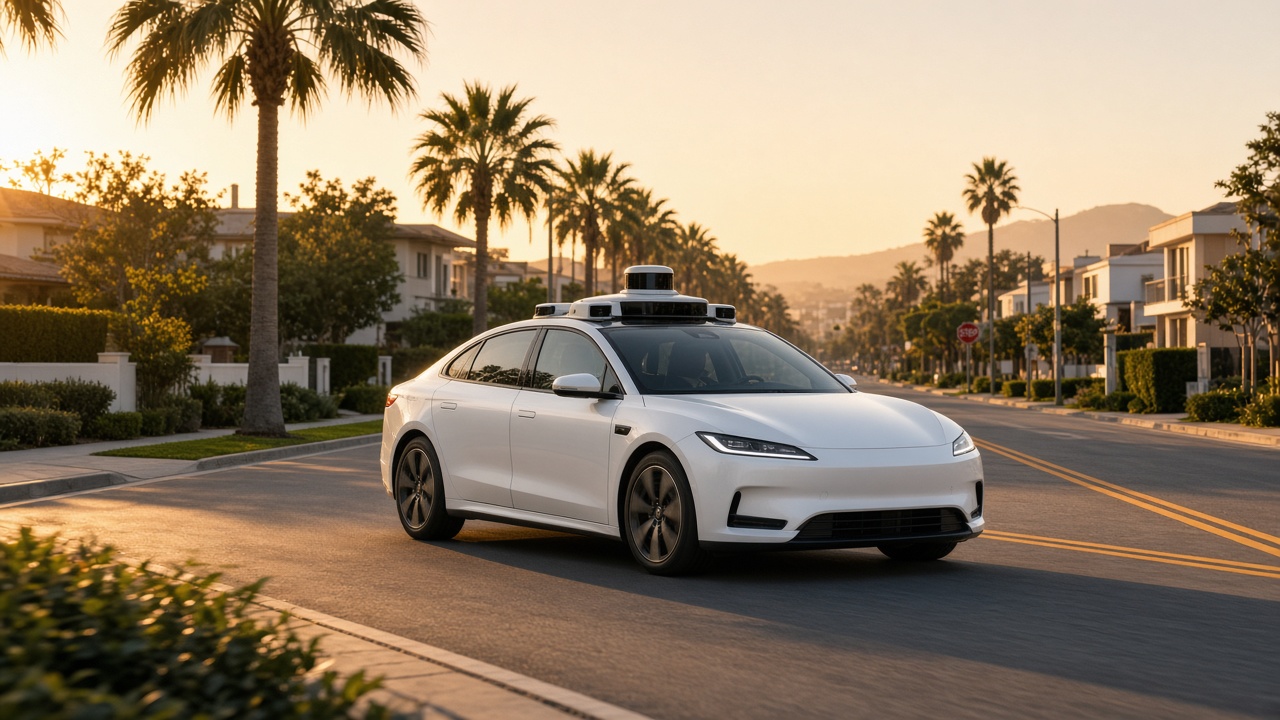
Robotaxi accident Orange County cases are new territory, and if you’ve been hit by a driverless car you may not know who to hold responsible. For years, driverless cars felt like something happening in Los Angeles or San Francisco. That is changing. In August 2026, the California Public Utilities Commission (CPUC) approved Waymo’s request to expand its driverless passenger service into portions of 18 California counties, including Orange County and Riverside County.
Waymo has said the rollout will be gradual, and as of October 2026 its public list of cities where it serves riders does not yet include Orange County or Riverside. But the approval means a car with no one behind the wheel could one day be next to you on Brookhurst Street, in an Irvine parking lot, or on the 91.
At Tafreshi Law Group, we believe in treating people, not just cases. So here is a plain-English look at what changed, who may be responsible if a robotaxi causes a crash, and what to do to protect yourself.
What Changed for Self-Driving Cars in 2026
Several developments came together this year:
- Waymo’s expanded service area. On August 14, 2026, the CPUC approved Waymo’s Advice Letter to expand driverless passenger service. The approved territory covers parts of Los Angeles, Orange, Riverside, San Bernardino, San Diego and Ventura counties in Southern California. Waymo’s filing with the CPUC names Anaheim and Irvine among the Orange County cities in its expanded area. The California DMV had approved the expanded deployment area in November 2025.
- Police can now “cite” a driverless car. Under AB 1777, starting July 1, 2026, a peace officer who sees an autonomous vehicle break a traffic law can issue a Notice of Autonomous Vehicle Noncompliance to the company. The company must forward it to the DMV within 72 hours, or within 24 hours if the officer flags the incident for priority review because the vehicle’s driving posed a risk of injury.
- New first-responder rules. Also beginning July 1, 2026, AB 1777 requires driverless vehicles to meet new requirements for interacting with first responders, including a two-way device in the vehicle for communicating with first responders.
- Stricter crash reporting. New DMV rules effective April 28, 2026 require autonomous vehicle companies to report collisions through 5-day, update and monthly reports aligned with federal (NHTSA) crash-reporting requirements.
Robotaxi Accident Orange County: Who Is Responsible?
With a human driver, the answer is usually the driver and their insurer. With a driverless car, responsibility can fall on several parties.
The company operating the vehicle
California Vehicle Code section 38750 defines the “operator” of an autonomous vehicle as the person in the driver’s seat or, if no one is in the driver’s seat, the person who causes the autonomous technology to engage. Companies that test or deploy autonomous vehicles in California must also maintain insurance, a surety bond or self-insurance of $5 million. In many cases, a claim after a robotaxi crash is directed at the company that runs the vehicle and its insurer.
The makers of the technology
If a software error, sensor failure or defective part caused the crash, a product liability claim may be possible against the maker of the vehicle or its self-driving system. These cases usually turn on technical evidence.
Other human drivers
If a human driver ran a red light on Harbor Boulevard and pushed a robotaxi into your lane, that driver may be responsible, not the robotaxi.
Shared fault
California uses comparative fault: each party’s share of responsibility matters, and your recovery can be reduced by any share assigned to you. You can read more in our guide to comparative negligence in California.
“Driver assist” is not “driverless”
Under California law, features like adaptive cruise control and lane-keep assist do not make a car an “autonomous vehicle.” If a car using driver-assist features hits you, the person behind the wheel is generally still treated as the driver.
Why Evidence Matters Even More After a Robotaxi Crash
Driverless cars record a huge amount of information. California law requires autonomous vehicles approved for public roads to have a separate system that captures and stores sensor data from at least 30 seconds before a collision, and that data must be preserved for three years.
The catch: the company controls that data, not you. An injury attorney can ask the company in writing, early on, to preserve video, sensor logs and remote-assistance records. The police report (including whether an officer issued a noncompliance notice), witness videos and your medical records matter too.
If You Were a Passenger in a Robotaxi
Passengers can be hurt too. Screenshot the trip details in the app, note what the remote support team told you, and save the app’s terms of service in effect on the date of your ride, because ride-app terms can affect how and where a claim is handled. Many of the same principles apply as in an Uber or Lyft crash; our article on how rideshare insurance works after an accident is a good starting point.
What to Do After a Crash With a Self-Driving Car in Orange County or Riverside
Whether you’re in Fountain Valley, Irvine, Huntington Beach or Riverside, these steps can help protect your health and your claim:
- Get to safety and call 911. Ask for police to respond, even if the robotaxi has stopped and “called for help.”
- Write down the vehicle’s details. Note the company name, the license plate, any fleet or vehicle number printed on the car, and the exact location. Officers need the plate number for a noncompliance notice.
- Photograph everything. Take pictures of the vehicles, road, signals, your injuries and the robotaxi’s interior if you were a passenger.
- Find witnesses. Get names and numbers, and look for nearby security cameras.
- See a doctor the same day. Adrenaline hides pain, and early records help connect your injuries to the crash.
- Be careful with recorded statements. You don’t have to give the company’s claims team a recorded statement right away. Our tips on dealing with insurance adjusters apply here too.
- Notify your own insurance company. Your policy may include medical payments or uninsured/underinsured motorist coverage that can help.
- Talk to a lawyer early. In California, most personal injury lawsuits must be filed within two years of the injury, and much shorter deadlines can apply if a government vehicle or agency is involved. See our guide to California’s statute of limitations for car accidents.
Frequently Asked Questions
Are Waymo robotaxis operating in Orange County right now?
Waymo received CPUC approval in August 2026 to expand into portions of Orange and Riverside counties, but says expansion will be gradual. As of October 2026, its list of cities served does not include Orange County or Riverside, and no launch date has been announced.
Can I sue if a driverless car hits me in California?
Generally, yes. Depending on the facts, a claim may be against the company operating the vehicle, the maker of the vehicle or its technology, another human driver, or several of them. California requires autonomous vehicle companies to carry $5 million in insurance, a bond or self-insurance.
Can police give a ticket to a car with no driver?
As of July 1, 2026, California officers can issue a Notice of Autonomous Vehicle Noncompliance to the company when they see a driverless car violate traffic laws. The company must report the notice to the DMV within 72 hours, or 24 hours for priority cases.
Is a car using Tesla Autopilot or similar features considered self-driving?
Not under California’s definition. Driver-assist features do not make a car an “autonomous vehicle,” so the human driver is generally still responsible.
How long do I have to file a claim?
For most California personal injury claims, the deadline to file a lawsuit is two years from the date of injury. Claims against a government entity can have a much shorter deadline, so it is best to get advice quickly.
Hurt in a Crash Involving a Self-Driving Car? We’re Here to Help
New technology shouldn’t leave injured people confused about their rights. If you were hurt in a crash with a robotaxi or any other vehicle in Orange County or the Inland Empire, we’ll listen, explain your options in plain English, and help you decide what’s next. Hablamos español.
Consultations are free, and we work on a contingency basis: you pay no attorney’s fee unless we recover money for you. We’ll explain exactly how fees and case costs work before you sign anything.
- Fountain Valley office: 18837 Brookhurst St, Ste 207, Fountain Valley, CA 92708. Call (949) 989-2511
- Riverside office: 4121 Brockton Ave, Ste 101, Riverside, CA 92501. Call (951) 583-1900
Prefer to write? Contact us online, or learn more about our Fountain Valley personal injury practice and our Riverside car accident attorneys.
Disclaimer: This article is for general information only and is not legal advice. Reading it does not create an attorney-client relationship. Every case is different, and past results do not guarantee a similar outcome. Laws and regulations change; information is current as of October 2026.
Sources
- Electrek, “Waymo wins California approval to expand robotaxis across 18 counties” (Aug. 14, 2026): https://electrek.co/2026/08/14/waymo-cpuc-approval-california-expansion-18-counties/
- Los Angeles Times, “Waymo wins approval for drastic expansion in L.A., Bay Area regions” (Aug. 14, 2026): https://www.latimes.com/business/story/2026-08-14/waymo-wins-approval-for-drastic-expansion-in-los-angeles-bay-area-regions
- Patch, “Waymo Gets Green Light On Operations In Orange County” (Aug. 17, 2026): https://patch.com/california/orange-county/waymo-gets-green-light-operations-orange-county
- CPUC, Reply of Waymo LLC in Support of Advice Letter No. 0004 (names Anaheim and Irvine; DMV approval Nov. 21, 2025): https://www.cpuc.ca.gov/-/media/cpuc-website/divisions/consumer-protection-and-enforcement-division/documents/tlab/av-programs/tcp0038152a-waymo-llc-reply-al-0004.pdf
- Waymo, cities currently served (checked Oct. 11, 2026): https://waymo.com/
- California Highway Patrol, “New Year, New Laws – CHP Highlights Public Safety Laws Taking Effect in 2026” (AB 1777): https://www.chp.ca.gov/news-alerts/news-list/new-year-new-laws–chp-highlights-public-safety-laws-taking-effect-in-2026/
- California DMV, AVIM 2026-002, Notice of Autonomous Vehicle Noncompliance: https://www.dmv.ca.gov/portal/file/avim-2026-002-notice-of-autonomous-vehicles-noncompliance-pdf/
- California DMV, AVIM 2026-001A, AV Reporting Requirements (effective Apr. 28, 2026): https://www.dmv.ca.gov/portal/file/avim-2026-001-reporting-requirements-pdf/
- California Vehicle Code § 38750 (operator definition, $5 million requirement, 30-second sensor data, driver-assist exclusion): https://leginfo.legislature.ca.gov/faces/codes_displaySection.xhtml?lawCode=VEH§ionNum=38750
- Cal. Code Regs., tit. 13, § 228.04 (financial requirements for AV deployment): https://www.law.cornell.edu/regulations/california/13-CCR-228.04
- California Code of Civil Procedure § 335.1 (two-year deadline): https://leginfo.legislature.ca.gov/faces/codes_displaySection.xhtml?lawCode=CCP§ionNum=335.1